You’ve seen the vibrant violet swirl of ube in ice creams, lattes, and cakes. It’s eye-catching, delicious and yes, exotic. But this isn’t just a social media darling. Ube, a purple yam originally from the Philippines, is being hailed as a nutritional powerhouse by food enthusiasts and health-conscious eaters alike. The real question many are asking now: Is eating ube regularly actually good for your health, or is it just another food trend? Let’s unpack the science, tradition, and health facts behind this violet root and see what really happens when you start eating it often.
What is ube and how is it traditionally used?
Ube (pronounced “oo-beh”) is a type of purple yam, native to Southeast Asia and especially prevalent in Filipino cuisine. It has a naturally sweet, nutty flavour and a vibrant purple flesh, due to its high concentration of anthocyanins the same antioxidants found in blueberries and red cabbage. Unlike the standard sweet potato or yam, ube boasts a unique nutritional composition that blends both energy-sustaining carbohydrates and a spectrum of micronutrients. While often confused with taro or purple sweet potato, ube has a distinct texture and nutritional profile.
Traditionally, ube is used in Filipino desserts like halaya (a jam-like preparation), cakes, and pastries. But more recently, it has found its way into Western health food circles baked, roasted, or mashed and even integrated into smoothies and breakfast bowls. Including ube in your diet has become a growing trend not only for its flavour, but because people are seeking colourful, functional foods with proven health benefits.
Is ube actually good for your body?
Yes when consumed in moderation and prepared properly, ube can be a valuable addition to a balanced diet. Its vibrant colour isn’t just for show it’s a visual indicator of its rich antioxidant content. The anthocyanins that give ube its signature hue are known for reducing oxidative stress in the body, which helps protect against chronic diseases and supports cellular health. In terms of basic nutrition, here’s what 100g of cooked ube generally contains:
- Complex carbohydrates
- Dietary fibre
- Vitamin C
- Potassium
- Small amounts of calcium and iron
- Natural sugars (less than in processed sweets)
- Anthocyanins (antioxidants)
One of the standout qualities of ube is its fibre content. It aids digestion and contributes to improved gut health, especially when compared to heavily refined carbohydrates. People searching for what is ube made of or is ube good for digestion will be pleased to know it’s gentle on the stomach and promotes regularity.
Can regular ube consumption help with weight management?
The answer depends on how the ube is prepared. On its own, steamed or baked ube is a slow-digesting carb that can help with satiety and blood sugar control. That means you feel full longer, reducing the likelihood of snacking or overeating especially when ube is used in savoury dishes rather than sugary desserts. Those wondering can ube help with weight loss are likely trying to replace less nutritious carbs like white bread or processed grains. In that case, ube is a smart swap it provides energy, nutrients, and natural sweetness without the crash that comes with refined sugar. However, ube’s health halo can quickly disappear when it’s loaded with condensed milk, sugar, and butter a common practice in traditional recipes. Like many ingredients, it’s not just what you eat, but how you prepare it that makes all the difference.
What are the possible risks or side effects of eating ube too often?
Eating ube regularly is generally safe for most people, but it’s not entirely without drawbacks. Ube is still a carbohydrate-rich food, and overconsumption especially for those with insulin sensitivity or diabetes can lead to elevated blood sugar levels. Additionally, people searching for ube health benefits and risks or side effects of eating too much ube need to consider how it fits into their broader diet. Relying too heavily on one root vegetable, no matter how nutritious, can lead to imbalances. Nutritional variety is key. Another point to consider: some ube products marketed in shops (especially in pre-made desserts) may not be 100% natural. Artificial colours or flavourings are sometimes added to mimic the purple hue. Always check the ingredient list if you’re buying ube-flavoured products and try to source from organic or reputable suppliers.
How to incorporate ube into a healthy diet
If you’re looking for healthy ways to cook ube, consider these techniques that preserve nutrients and keep things balanced:
Steamed or roasted
Boiling or steaming peeled ube helps retain its vitamin C and potassium content. Roasting it with a drizzle of olive oil brings out its sweetness and keeps it filling without added sugar.
Mashed or blended
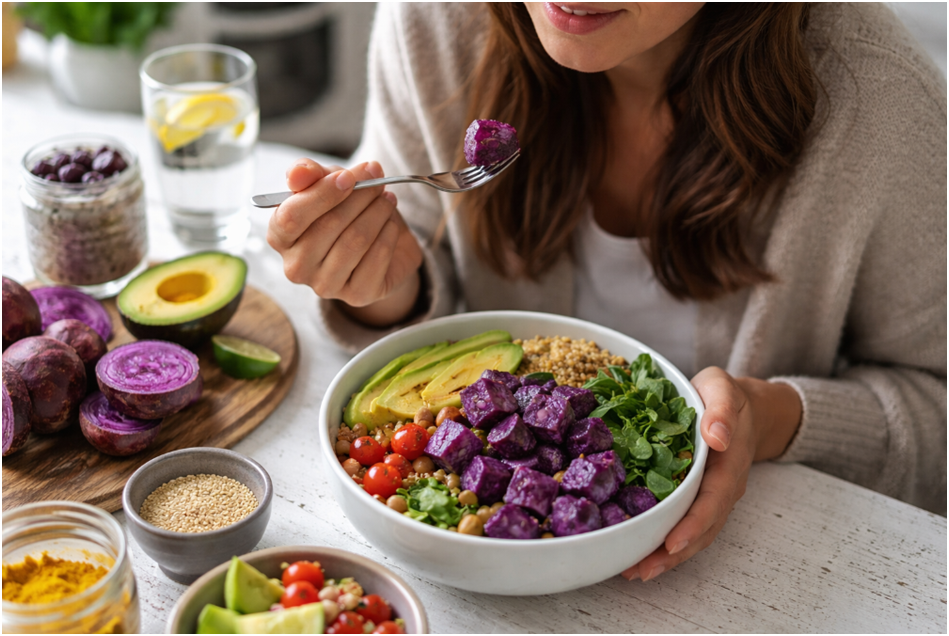
Mashed ube can replace mashed potatoes or be added to smoothie bowls with oats, chia seeds, and fresh fruit. This is a great option for people seeking to eat ube daily in a controlled, health-conscious way. You can also cube ube and add it to curries or stews for a vibrant twist. It pairs particularly well with coconut milk and spices like turmeric or ginger. Including ube in a balanced diet isn’t about replacing everything else on your plate, but about complementing it with a food that’s naturally rich in fibre, colour, and plant-based nutrients.
Is ube just a trend or here to stay?
Eating ube regularly is more than a fleeting foodie trend it’s a habit rooted in tradition, now validated by science. Its vibrant colour, unique taste, and array of health benefits make it a worthy addition to a diverse, plant-focused diet. Whether you’re drawn to its flavour, curious about its nutrients, or seeking alternatives to processed carbs, ube offers a naturally sweet and health-friendly option. Have you tried incorporating ube into your weekly meals? Let us know how you use this vibrant root in your kitchen!